

Don’t Waste Your 2026
What John Piper taught me about living with intention

Years ago, I watched a sermon that wrecked me.
John Piper stood at a conference and told the story of a couple who retired early, moved to Florida, and spent their final years collecting seashells. Then he asked the question that’s haunted me ever since: “Is that a life well spent?”
I later read his book, Don’t Waste Your Life, and I’ve lost count of how many people I’ve made read it since. Lecrae turned it into an anthem. And somewhere along the way, the phrase became a kind of north star for me. A holy warning. A sacred invitation.
So as we stand at the beginning of a new year, I want to say something simple: Don’t waste your 2026.
Now, before we go any further, let me be clear. The new year will not magically change your life. The calendar flipping from December 31 to January 1 holds no inherent power. I love seeing people set resolutions, I really do. But we all know the statistics. How many will still be going to the gym by March? How many will keep to their diets? How many will make it past Leviticus in their attempt to read the whole Bible?
Not many.
And yet, I still think we should set goals. We should make resolutions. Not because the date is magic, but because intention matters. Because a life lived on autopilot drifts toward waste. Because clarity about what you’re aiming at shapes what you actually do.
But first, what does a wasted 2026 actually look like?
I think we need to name this before we move on. Because “wasting your life” sounds dramatic, and most of us assume it doesn’t apply to us. We’re not doing anything terrible. We’re not hurting anyone. We’re just... living.
But that’s precisely the danger.
A wasted 2026 doesn’t look like spectacular failure. It looks like drifting. It looks like arriving at December 31st and realising you spent twelve months reacting instead of living with intention. Scrolling instead of creating. Consuming instead of contributing. Busy, but not fruitful. Tired, but not from anything that mattered.
A wasted year is one where you pursued goals that couldn’t satisfy you even if you achieved them. Where you chased success as the world defines it and ignored what your soul was actually hungry for. Where you were so distracted by the urgent that you never got around to the important.
A wasted 2026 is one where you knew what God was calling you to, but you kept putting it off. Where you stayed comfortable when you were meant to step out. Where fear made more decisions than faith did.
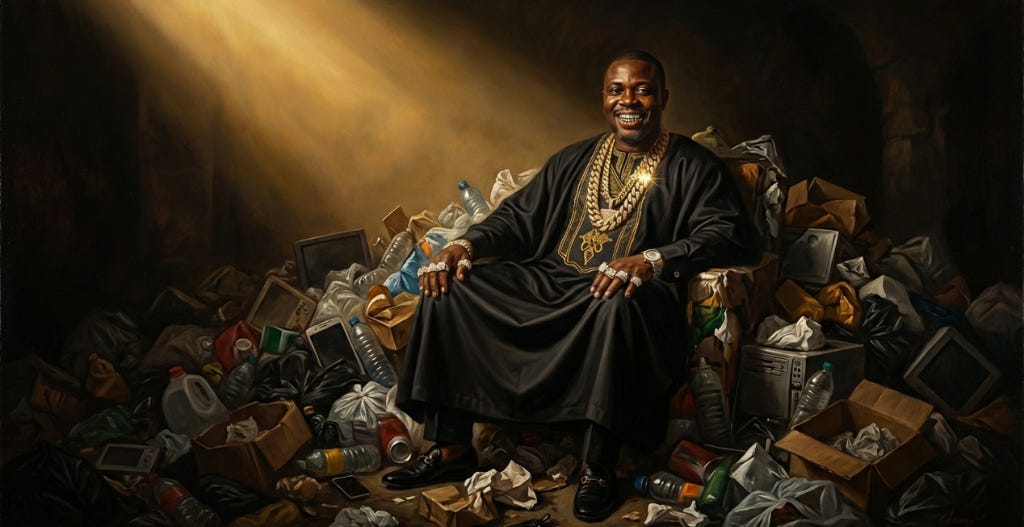
It’s a year where you end up with a lot of seashells and an empty soul.
I don’t say this to shame anyone. I say it because I’ve wasted seasons of my own life this way. And the tragedy wasn’t that I did terrible things. The tragedy was that I did nothing of eternal significance. I played it safe. I optimised for comfort. I drifted.
So here are six things I plan to do in 2026 to avoid that fate. And for anyone who cares to listen, I’d love to help you do the same.
1. Redefine success.
Culture measures success by scale. By reach. By numbers. But Jesus said something strange: “Well done, good and faithful servant.” Not successful. Faithful.
And yet, faithfulness was never meant to be barren. Jesus also said, “By their fruit you will recognise them.” The goal isn’t faithfulness that produces nothing. It’s faithfulness that bears fruit in its proper season.
Now, let me say something important here: ambition is not the enemy. There’s nothing wrong with wanting to do significant things for God. The problem comes when our ambition produces anxiety rather than worship. When we’re driven by fear of insignificance rather than love for God and neighbour. When we measure our worth by our output rather than receiving it as a gift.
This year, I’m letting go of metrics that feed my ego and embracing the ones that form my soul. Faithfulness in obscurity. Fruitfulness in God’s timing. Obedience without applause. Consistency when no one’s watching. That’s the kind of success I want to chase.
2. Be led by the Spirit.
I’m prone to living by my own wisdom, my own strength, my own strategies. But Paul writes in Galatians, “Walk by the Spirit, and you will not gratify the desires of the flesh.”
The Christian life was never meant to be self-directed. It’s Spirit-led. And the way we position ourselves to hear the Spirit’s voice and follow his leading is through the ancient practices the church has always known: Scripture, prayer, silence, solitude, fasting, Sabbath, community.
These disciplines are not ways of earning God’s favour. They’re ways of opening ourselves to the God who is already favourably disposed toward us. They create space for the Spirit to do what only the Spirit can do.
This year, I will not live by my might or by my power, but by the Spirit (Zechariah 4:6). For as many as are led by the Spirit of God are the sons of God (Romans 8:14). I will live Spirit-led.
3. Find my story in God’s story.
Most of my anxiety comes from forgetting what story I’m in. When I lose the plot, every setback feels like the end. Every delay feels like failure. Every closed door feels like rejection.
But here’s what I’ve come to understand: before I can find my story in God’s story, I have to rediscover God’s story itself. I have to ask the deeper questions. What is God doing in the world? What is God doing in my generation? And how can I be part of it?
The Bible is not a collection of moral lessons or inspirational quotes. It’s the unfolding drama of God’s redemption. Creation, fall, redemption, restoration. And the invitation of the gospel is not simply to believe certain truths, but to find yourself inside that story. To locate your life within God’s purposes.
When you do that, everything changes. You stop asking, “What’s my purpose?” and start asking, “What’s God doing, and how can I be part of it?” You stop demanding that God bless your plans and start seeking to join his.
And here’s what I’ve found to be true: the safest place any of us can be is in the will of God. It won’t always be comfortable. It often isn’t. But there’s a kind of security that comes from knowing you’re where you’re supposed to be, doing what you were made to do. Even when it’s hard, you’re held.
This year, I want to read Scripture not as a self-help book, but as the story that tells me who God is, what he’s doing, and where I belong.
4. Create from rest.
My wife will be happy to see this point.
In the early years of our marriage, I religiously followed the gospel that Gary Vee preached. Hustle harder. Sleep less. Outwork everyone. And I took it seriously. I drank energy drinks like they were water. I didn’t sleep well. I wore my exhaustion like a badge of honour.
But here’s what that gospel cost me: I led my business from anxiety. I led my ministry from anxiety. I led my marriage from anxiety. Everything I built was built on fumes and fear. And the people closest to me paid the price.
The Lord has been healing me over the past few years. Slowly, gently, persistently. I’ve been letting go of my idols—the idol of productivity, the idol of visibility, the idol of proving myself. I’ve learned to drop my burdens at his feet. To stop carrying what was never mine to carry. To believe that God is more committed to his purposes than I am, and that my striving adds nothing to his sovereignty.
Now I can create from rest and freedom. No more anxiety. No more proving. No more running on empty.
God rested before Adam worked. That means rest is not a reward for labour. It’s the rhythm from which labour flows. I’ve spent too many seasons confusing exhaustion with faithfulness. This year, I’m building rest into my calendar before I build goals. Sabbath first. Then everything else.
I plan to continue that way.
5. Commit to ordinary obedience.
Most of God’s work happens quietly. The emails no one sees. The prayers no one hears. The small acts of kindness that will never trend. The conversation with your child that shapes their soul. The integrity in a meeting that no one will applaud. The faithfulness in a marriage when romance feels distant.
We’re conditioned to chase the spectacular. The breakthrough testimony. The viral moment. The platform. But if you read Scripture carefully, you’ll notice that God seems to prefer the mundane. Moses spent forty years in the wilderness before the burning bush. David tended sheep before he faced Goliath. Jesus spent thirty years in obscurity before three years of public ministry.
The hidden years were not wasted years. They were forming years.
Paul said, “Whatever you do, work at it with all your heart, as working for the Lord, not for human masters.” Whatever. Not just the impressive things. Not just the visible things. Whatever.
This year, I want to choose consistency over visibility. Trust that faithfulness compounds. Believe that what’s hidden today becomes harvest tomorrow. The people who shape history are rarely the ones chasing it. They’re the ones who showed up, day after day, doing the next faithful thing.
6. Pray. Plan. Pursue.
Proverbs 16:9 says, “Many are the plans in a person’s heart, but it is the Lord’s purpose that prevails.”
Some people read that and think planning is pointless. Why bother if God’s going to do what he wants anyway? But I don’t think that’s what Solomon meant. He’s not discouraging planning. He’s putting it in its proper place—under God’s sovereignty, not above it.
Here’s the thing: God himself is a planner. He planned creation. He planned redemption. Ephesians tells us he planned good works for you to walk in before you were even born. So when you plan, you’re actually reflecting the character of your Creator. You’re stewarding what he’s given you.
And prayer? God genuinely wants to talk to you. He longs to reveal his will. He invites you into the work he’s already doing. When you pray, you’re not twisting God’s arm or dropping coins in a celestial vending machine. You’re aligning your heart with his. You’re saying, “Father, what are you up to? And can I join you?”
Then there’s pursuit. I love what David did in 1 Samuel 30. His city was raided, his family taken, his men ready to stone him. And in that moment, David inquired of the Lord: “Shall I pursue this raiding party? Will I overtake them?” God’s answer? “Pursue them. You will certainly overtake them and succeed in the rescue.”
David prayed first. Then he ran. He didn’t sit around waiting for God to fix everything. He moved—but he moved with a word from God in his pocket.
That’s the rhythm I want this year. Pray with dependence. Plan with wisdom. Pursue with passion. Not my agenda with God’s blessing stamped on it, but God’s purposes flowing through my life.
So that’s my list. Six things. Not six ways to impress anyone. Six ways to not waste the year.
Because here’s what Piper helped me see all those years ago: the tragedy is not a life that’s hard. It’s a life that’s empty. A life spent on things that don’t matter. A life that arrives at the end with nothing but seashells.
I don’t want that. And I suspect you don’t either.
So let’s not waste 2026.
Let’s live it.
Happy New Year!
Thanks for supporting my newsletter journey so far. I pray and plan to write more stories that will encourage you to live as God’s masterpiece.
Have a fruitful year!