

The Problem with “Finding Yourself”
You’re not lost. You’re dead. And you need something far more radical than a search party.

I spent most of my late teens and early twenties trying to “find myself.”
I felt lost, so I wandered. Through self-help books, personality tests, new experiences, old pleasures, anything that promised to show me who I really was. And I’d tell myself that not all who wander are lost. That sounded wise. It sounded like permission. But the truth is, I wandered. And I got lost.
But wander long enough, and you start to discover something: you can’t find what isn’t there.
“Finding yourself” is the dominant narrative of our time. You hear it everywhere. And I want to be careful, because I’m not saying all self-reflection is bad. But there’s a version of this story that sounds wise and feels empowering and is, at its core, a lie.
The lie goes something like this: somewhere inside of you is the truest version of yourself. Your job is to peel back the layers of expectation and performance until you arrive at this authentic core. And once you find it, you’ll finally be free.
Viktor Frankl, a man who survived the concentration camps and spent his life studying what gives humans meaning, came to a conclusion that cuts against everything our culture tells us. He said that self-actualisation is not something you can aim at directly. It only happens as a side-effect of self-transcendence. In other words, you don’t find yourself by looking inward. You find yourself by being directed toward something, or someone, beyond yourself.
C.S. Lewis took it a step further. He argued that if we carry desires that nothing in this world can satisfy, the most logical explanation is that we were made for another world. That ache you feel when you’ve achieved the thing, ticked the box, arrived at the destination, and still feel empty? That’s not a glitch. It’s a signpost.
I got tired of finding my way. What I needed was Yahweh. The One who made me, and made me for Himself. Augustine said it centuries ago: our hearts are restless until they find their rest in God. Every path, every pleasure, every pursuit will never truly satisfy. We will never truly find ourselves until we find the One who found us.
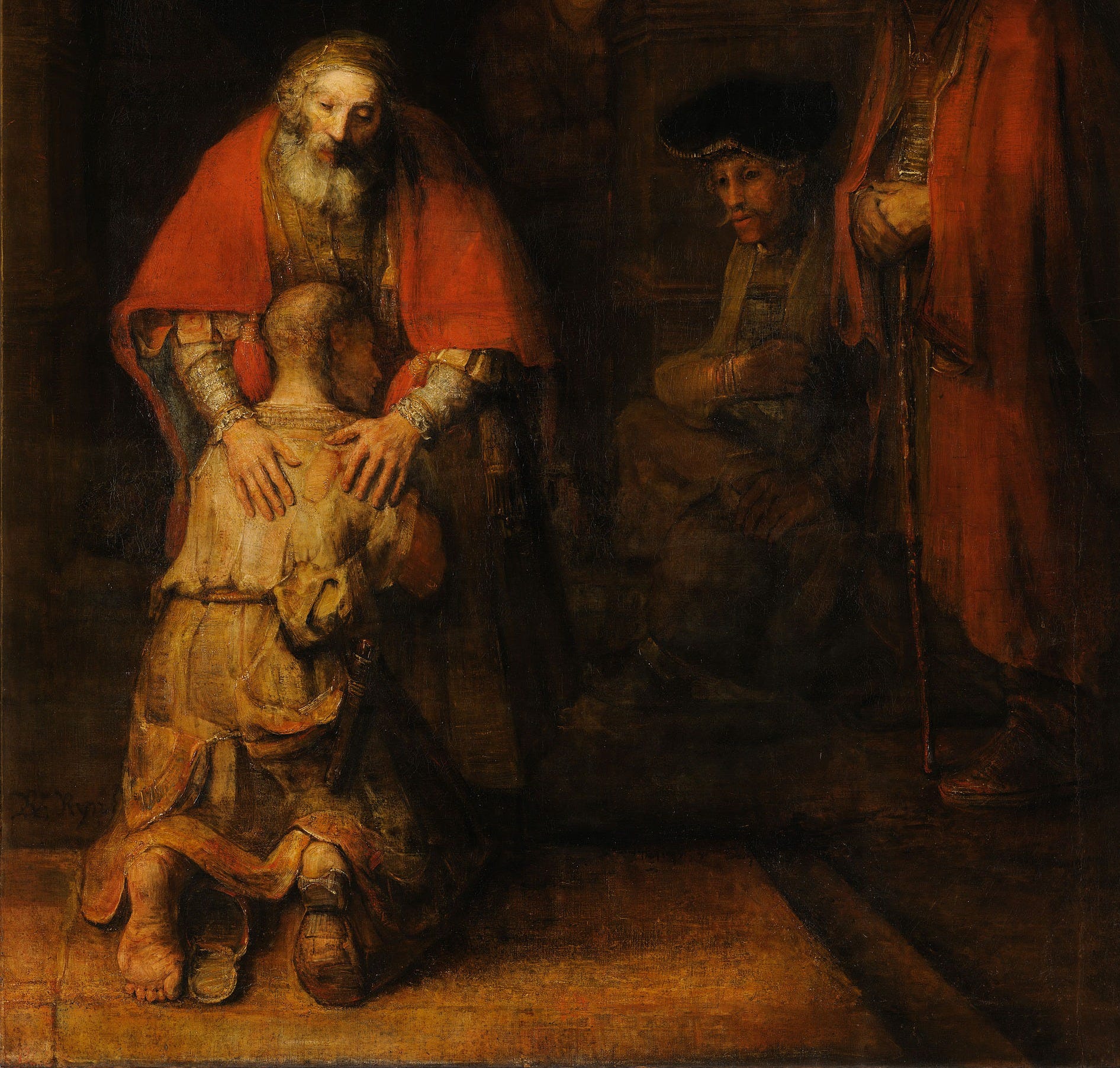
We call it the parable of the Prodigal Son, but if you pay attention, that’s not really what it is. There are two sons in that story, and both of them are lost. The younger one runs from the father and ends up in a pigpen. The older one stays in the father’s house but lives like a servant, earning what was already freely his. One is lost in rebellion. The other is lost in religion. Neither of them knows who they are.
This part of the story wrecks me every time. When the younger son finally comes home, rehearsing his little speech about being unworthy, the father doesn’t even let him finish. He runs to him, embraces him, puts a robe on his back and a ring on his finger. And then he says something we read too quickly: “This son of mine was dead, and is alive again.”
Not just lost. Dead.
The father didn’t describe his son’s problem as a navigation issue. He described it as a life-and-death issue. The boy didn’t just need to be found. He needed to be given new life. And this story, when you really sit with it, isn’t the story of the prodigal son at all. It’s the story of the lavish love of the father. He’s the one who runs. He’s the one who restores. He’s the one who declares dead things alive again.
And the beauty of the gospel is this: while we were busy searching for ourselves, God was already searching for us. Before we even thought to look up, He was already running down the road. He finds us so that we can find ourselves in Him.
“For we are God’s masterpiece. He has created us anew in Christ Jesus, so we can do the good things he planned for us long ago.”, Paul tells the believers in Ephesians plainly, and by extension us.
The Greek word for masterpiece is poiema. It’s where we get the English word “poem.” A poem doesn’t write itself. A poem doesn’t go searching for its own meaning. A poem is composed by someone. Its beauty and purpose come from the one who penned it.
Self-discovery says, “Look inside.” The gospel says, “Look up.” Self-discovery says, “Find your truth.” The gospel says, “Let me tell you who you are.”
And what He says? You are my masterpiece.
You were never meant to find yourself. You were meant to be found. And made alive.
This truly blessed me—so beautiful!!! In a world of {self this and that," this is absolute truth.
Turn your face towards the Sun (God) and let the shadows fall behind you 💕